
Case study
Ferramenta da TEO: one catalog, connected marketplaces
Multiple suppliers. A growing catalog. Different rules in every market. Espresso brought these moving parts into one operating model with Channable, so Ferramenta da TEO could manage product data centrally while keeping control of each market’s offers.

Results and operating scope
The commercial figures below cover only ManoMano and Kaufland in 2026 year to date; the configuration count describes the wider setup.
€84K+
Tracked marketplace sales
ManoMano + Kaufland · 2026 YTD
1,376
Valid orders
Same two networks · 2026 YTD
Operating scope
32
Channel configurations
Marketplaces, ads, comparison and custom outputs
Source: Espresso project case study. Reported sales and orders: ManoMano + Kaufland, 2026 YTD. PLN/CZK sales converted to EUR at 14 October 2026 spot rates. Amazon is excluded pending refund reconciliation; all other channels are also excluded from these commercial totals.
The challenge
Stock, prices, images and product identifiers arrived from different sources. New products had to fit a consistent catalog structure, while each destination needed its own pricing, product selection and field mappings. Adding markets could not mean rebuilding the workflow.
One control layer. Local execution.
Source data flows into one structured Channable project. Shared rules keep the catalog consistent; destination-specific settings preserve control over each market’s offers.
Source
Supplier feeds, stock, prices, images and product identifiers arrive through recurring updates.
Channable
Reusable rules handle cleanup, selection and exclusions, pricing, local mappings and feed validation.
Destinations
Marketplaces, advertising feeds, comparison sites and custom outputs receive the data and offer settings each requires.
Inside the project
Two screenshots from the supplied project case show the source setup and market-level configuration behind the operating model.
Multiple sources. One recurring project.
The screenshot shows recurring CSV and Google imports in one Channable project. The source case also describes Shopify inputs.
Project screenshots supplied by Espresso; internal labels redacted.
View full-size screenshot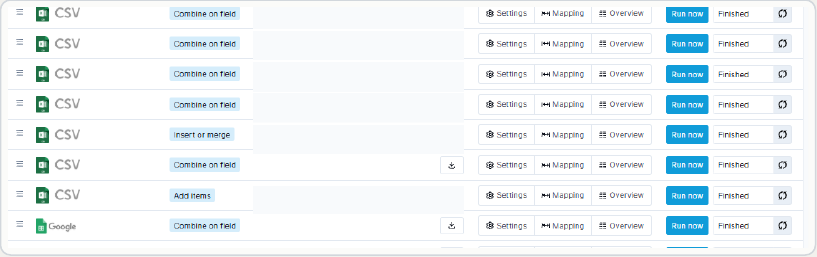
Shared logic. Separate market settings.
Nine independently configured Kaufland markets, with separate offer control. This is configuration evidence, not a count of markets with recorded sales.
Project screenshots supplied by Espresso.
View full-size screenshot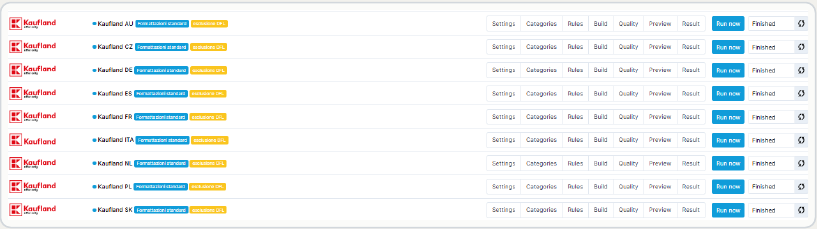
What Espresso changed
- Combined supplier data and recurring updates into a structured catalog, with rules for cleanup, product selection and exclusions.
- Built reusable rules in Channable, with market-specific pricing and product mappings rather than one identical output for every destination.
- Connected marketplaces, advertising and comparison channels, then maintained the setup as products, markets and requirements changed.
Discuss your project
Tell us what you want to connect, fix or hand over to our team.